

Adverse Events
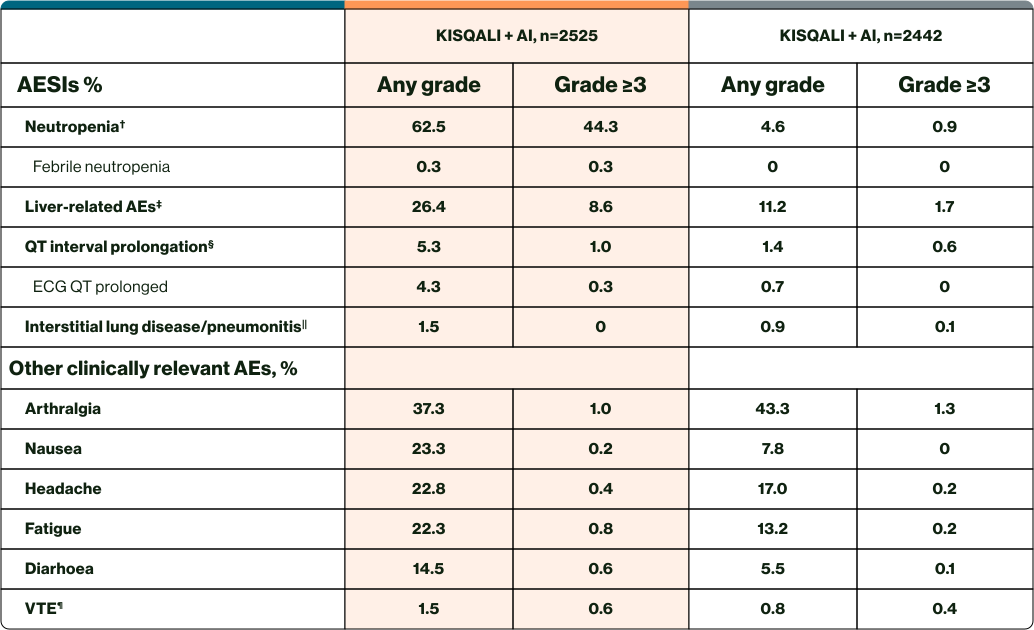
A manageable safety profile with mainly reversible and mostly asymptomatic adverse events. (1-3)
KISQALI + AI can help patients experience life with minor disruption on a daily basis. Life on their terms. (1,3-6)
KISQALI is well tolerated with a consistent safety profile in the broadest range of HR+/HER2– EBC patients, including those with grade 1 disease or no nodal involvement. (2,6)
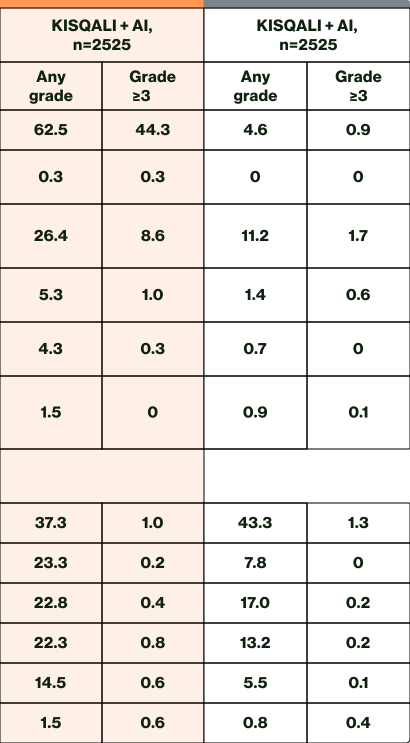
Adverse events reported in the NATALEE study. (6)

← Slide to view more →
* The majority of adverse events were transient, manageable, and reversible with dose reduction or interruption. (2)
† This is a grouped term that combines neutropenia and neutrophil count decreased. (6)
Median time to resolution of ≥ grade 3 neutropenia was 0.3 months for KISQALI + AI. (2)
‡ This is a grouped term that includes all preferred terms identified by standardised MedDRA queries for drug-related hepatic disorders. (6)
Median time to resolution of grade 3 or 4 ALT/AST elevation was 0.7 months for KISQALI + AI. (2)
(§) This is a grouped term. (6)
(‖) This is a grouped term that includes all preferred terms identified by standardised MedDRA queries for interstitial lung disease. (6)
(¶) Grouped term that includes all preferred terms identified by standardised MedDRA queries for venous thromboembolism. (6)