

Dose adjustments
Dose adjustment guidance in HR+/HER2– EBC.
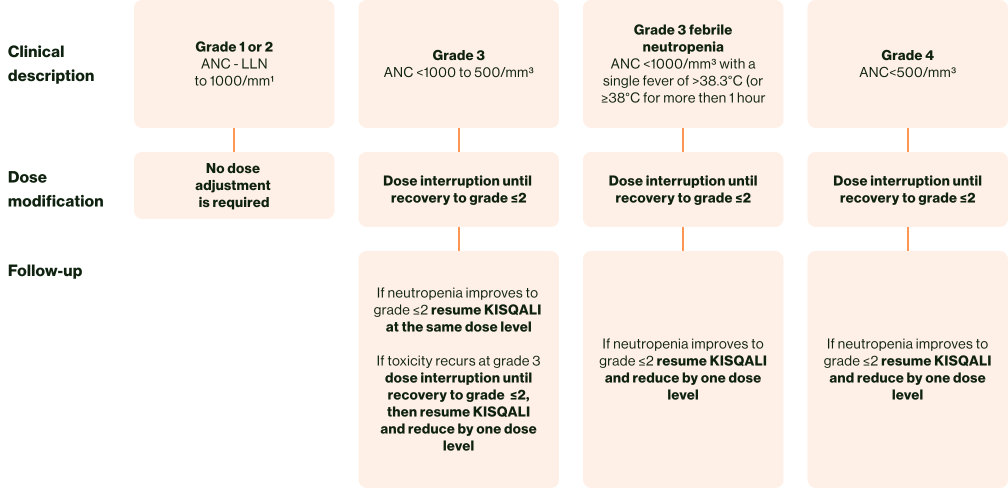
Neutropenia*
Full blood counts should be performed before initiating treatment with KISQALI. (1)
After initiation of KISQALI, full blood count should be monitored every 2 weeks for the first two cycles,
at the beginning of each of the subsequent four cycles, then as clinically indicated. (1)
← Slide to view more →
* Please refer to the KISQALI (ribociclib) Summary of Product Characteristics for more information on dose modification and management of neutropenia. (1)
† Grading according to Common Terminology Criteria for Adverse Events (CTCAE). (2)
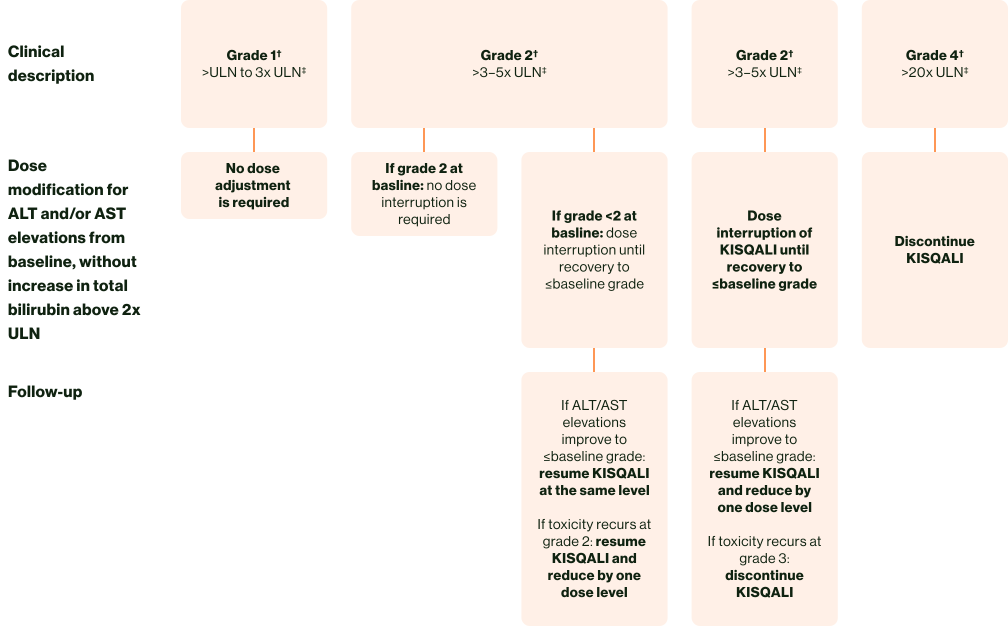
Liver-related adverse events *
Liver function tests should be performed before initiating treatment with KISQALI. (1)
After initiation of KISQALI, liver function tests should be performed every 2 weeks for the first two cycles, at the beginning of each of the subsequent cycles, then as clinically indicated. If grade ≥2 abnormalities are noted, more frequent monitoring is recommended. (1)
← Slide to view more →
If patients develop ALT and/or AST >3x ULN along with total bilirubin >2x ULN irrespective of baseline grade, discontinue KISQALI. (1)
If dose reduction below 200 mg/day is required, the treatment should be permanently discontinued. (1)
* From baseline, without increase in total bilirubin >2x ULN. (1)
† Grading according to Common Terminology Criteria for Adverse Events (CTCAE). (2)
‡ If baseline was normal. (2)
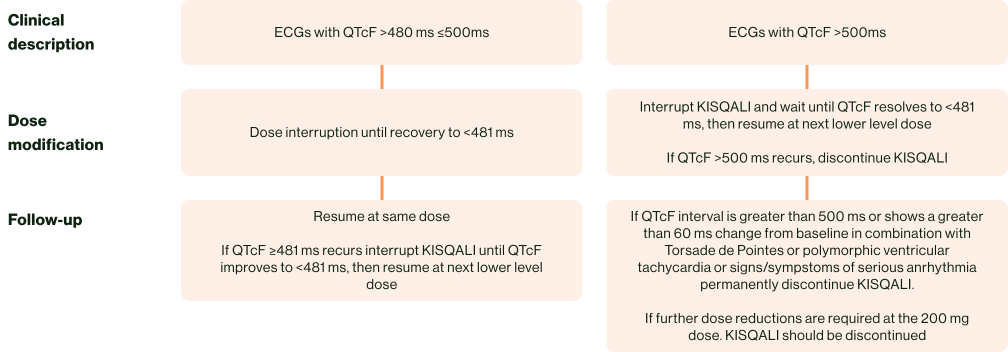
QT prolongation
ECG should be assessed before initiating treatment with KISQALI. (1)
Repeat ECG at approximately Day 14 of the first cycle, and as clinically indicated. In case of QTcF prolongation at any given time during treatment, more frequent ECG monitoring is recommended. (1)
← Slide to view more →
Dose Modification
KISQALI single-strength tablets make dose reduction simple and convenient. *(1)
With KISQALI, adverse events are mostly reversible with dose reduction or interruption. Dose reductions with KISQALI mean no need for new mid-cycle prescriptions or additional costs. (1)

* Dose adjustment for adverse reactions should be made by reducing the number of tablets taken. If dose reduction below 200 mg/day is required, discontinue treatment. KISQALI dose modification is recommended based on individual safety and tolerability. (1)
† Median time to resolution of ≥ grade 3 neutropenia was 0.3 months for KISQALI + NSAI. Median time to resolution of grade ≥3 or 4 ALT/AST elevation was 0.7 months for KISQALI + NSAI. (1)